
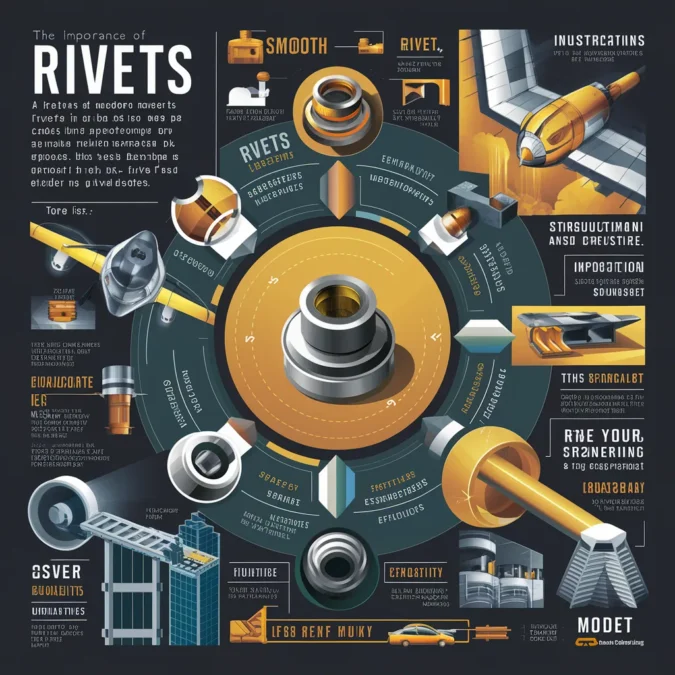

A rivet is one of the most important fastening tools used in engineering, construction, manufacturing, and industrial design. Although modern industries now use advanced welding technologies and mechanical fasteners, rivets continue to play a vital role in creating strong and permanent joints. From massive bridges and aircraft to ships, buildings, and household products, rivets have helped shape modern infrastructure for centuries. Their reliability, durability, and strength make them an essential component in projects where safety and structural stability are critical.
The word “rivet” may sound simple, but its applications are incredibly broad and technically important. Engineers and manufacturers rely on rivets because they provide secure fastening solutions capable of withstanding heavy pressure, vibration, and environmental stress. Unlike temporary fasteners such as screws or bolts, rivets create permanent connections that are difficult to loosen over time. This quality makes them especially valuable in industries where long-term structural integrity is essential.
In this article, we will explore the meaning of rivets, their history, different types, industrial applications, advantages, installation methods, and their continuing importance in modern engineering and manufacturing. Whether you are a student, engineer, construction worker, or simply curious about industrial technology, understanding rivets provides insight into one of the most reliable fastening systems ever developed.
What Is a Rivet?
A rivet is a permanent mechanical fastener used to join two or more materials together. It typically consists of a smooth cylindrical shaft with a head on one end. During installation, the opposite end is deformed or compressed to create another head, permanently securing the materials in place.
Rivets are commonly made from materials such as aluminum, steel, copper, or brass depending on the strength and corrosion resistance required for a particular project. They are designed to withstand heavy loads and harsh environmental conditions, making them ideal for industrial and structural applications.
Unlike screws or bolts, rivets are not intended for regular removal. Once installed, they create a stable and durable joint that remains secure even under intense vibration or pressure. This reliability explains why rivets are widely used in aerospace engineering, bridge construction, shipbuilding, and heavy machinery manufacturing.
The History of Rivets
Rivets have been used for thousands of years and represent one of the oldest fastening technologies in human history. Ancient civilizations including the Egyptians and Romans used metal rivets in weapons, armor, jewelry, and construction projects. Early blacksmiths manually forged rivets by heating metal and shaping it into fastening pins.
During the Industrial Revolution, rivets became essential in large-scale engineering projects. Massive steel structures such as railways, steam engines, bridges, and ships relied heavily on riveting techniques. One of the most famous examples is the Eiffel Tower, which contains millions of rivets holding its iron framework together.
Riveting reached peak industrial importance during the late nineteenth and early twentieth centuries. Shipbuilders used rivets extensively in ocean liners and naval vessels, while aircraft manufacturers adopted lightweight aluminum rivets for aviation structures. Although welding technology later replaced some riveting applications, rivets remain indispensable in many industries today.
Different Types of Rivets
There are several types of rivets designed for specific engineering and manufacturing purposes. Each type offers unique advantages depending on the materials, environment, and structural requirements involved.
Solid Rivets
Solid rivets are among the oldest and strongest types of rivets. They consist of a single solid metal piece and are commonly used in aircraft structures, bridges, and heavy industrial equipment. These rivets require access to both sides of the material during installation.
Blind Rivets
Blind rivets, also called pop rivets, are widely used because they can be installed from one side only. This makes them ideal for applications where access to the back side is limited. Blind rivets are common in automotive manufacturing, electronics, and household products.
Tubular Rivets
Tubular rivets contain a partially hollow shaft, making them easier to install with less force. They are often used in leather goods, textiles, luggage, and lightweight assemblies.
Drive Rivets
Drive rivets feature a central pin that expands the rivet body during installation. They are frequently used for signs, labels, and decorative applications.
Split Rivets
Split rivets have a split shaft that spreads apart during installation. These rivets are mainly used in soft materials such as wood, leather, or plastic.
Applications of Rivets in Modern Industries
Rivets are used across numerous industries because of their strength, durability, and reliability. Their ability to maintain structural integrity under extreme conditions makes them essential in both large-scale engineering and everyday products.
Aerospace Industry
Aircraft manufacturing depends heavily on rivets because airplanes experience constant vibration, pressure changes, and stress during flight. Aluminum rivets are commonly used in aircraft structures because they provide strong fastening without adding excessive weight.
Construction and Infrastructure
Bridges, skyscrapers, and steel frameworks often use rivets to create stable structural joints. Rivets can handle heavy loads and resist movement caused by environmental forces such as wind and earthquakes.
Automotive Manufacturing
Car manufacturers use rivets for assembling body panels, chassis components, and interior structures. Rivets improve durability while reducing assembly time.
Shipbuilding
Ships and submarines require durable fastening systems capable of resisting water pressure and corrosion. Rivets have historically played a major role in marine engineering.
Electronics and Consumer Products
Many electronic devices and household products contain small rivets used for lightweight assembly and secure fastening.
Advantages of Using Rivets
Rivets offer several important advantages compared to other fastening methods. Their reliability and versatility explain why they continue to be widely used despite technological advancements.
One major advantage is durability. Rivets create permanent joints that resist loosening caused by vibration or movement. This makes them ideal for transportation and industrial equipment.
Another benefit is strength. Rivets distribute force evenly across connected materials, reducing the risk of structural failure. They are particularly effective in shear-load applications.
Rivets are also resistant to environmental conditions. Properly selected rivet materials can withstand corrosion, heat, and moisture for long periods.
Additionally, riveting is often faster and more cost-effective than welding, especially in mass production environments.
Rivets vs Welding
Although welding is widely used in modern manufacturing, rivets still offer unique benefits. Welding permanently fuses materials together using heat, while rivets mechanically secure materials without melting them.
Rivets are often preferred when heat could damage sensitive materials or weaken structural properties. They also allow for easier inspection and maintenance because individual rivets can sometimes be replaced without dismantling the entire structure.
In aerospace engineering, rivets remain extremely important because they provide flexibility and fatigue resistance that some welded joints cannot achieve under repeated stress conditions.
The Future of Riveting Technology
Modern manufacturing continues to improve riveting technology through automation, robotics, and advanced materials. Automated riveting systems now allow industries to achieve higher precision and production efficiency.
Lightweight composite materials used in modern aircraft and vehicles also require specialized riveting techniques. Engineers continue developing stronger, lighter, and more corrosion-resistant rivets to meet evolving industrial demands.
As sustainability becomes more important, manufacturers are exploring recyclable fastening systems and eco-friendly production methods. Despite advances in adhesives and welding, rivets are expected to remain a fundamental part of engineering and construction for decades to come.
Conclusion
Rivet are among the most reliable and historically significant fastening systems ever created. From ancient civilizations to modern aerospace engineering, rivets have played a crucial role in building strong, durable, and safe structures. Their ability to create permanent joints capable of withstanding pressure, vibration, and environmental stress makes them indispensable across industries including construction, aviation, automotive manufacturing, and shipbuilding.
Although modern technology continues evolving, rivets remain highly relevant because of their strength, versatility, and cost-effectiveness. Understanding rivets not only highlights the importance of engineering innovation but also demonstrates how simple mechanical principles can support some of the world’s most advanced structures and machines. As industries continue advancing into the future, rivets will likely remain an essential component of modern manufacturing and infrastructure development.
Frequently Asked Questions (FAQ)
What is a rivet used for?
A rivet is used to permanently join two or more materials together in construction, manufacturing, and engineering projects.
What are the main types of rivets?
The main types include solid rivets, blind rivets, tubular rivets, drive rivets, and split rivets.
Why are rivets important in aircraft manufacturing?
Rivets provide strong, lightweight, and vibration-resistant fastening, making them ideal for aircraft structures.
Are rivets stronger than screws?
In many structural applications, rivets provide greater long-term stability and resistance to vibration than screws.
Can rivets be removed?
Yes, but removing rivets usually requires drilling or cutting because they are designed as permanent fasteners.
Why are rivets still used today?
Rivets remain popular because they are durable, reliable, cost-effective, and suitable for high-stress environments.