
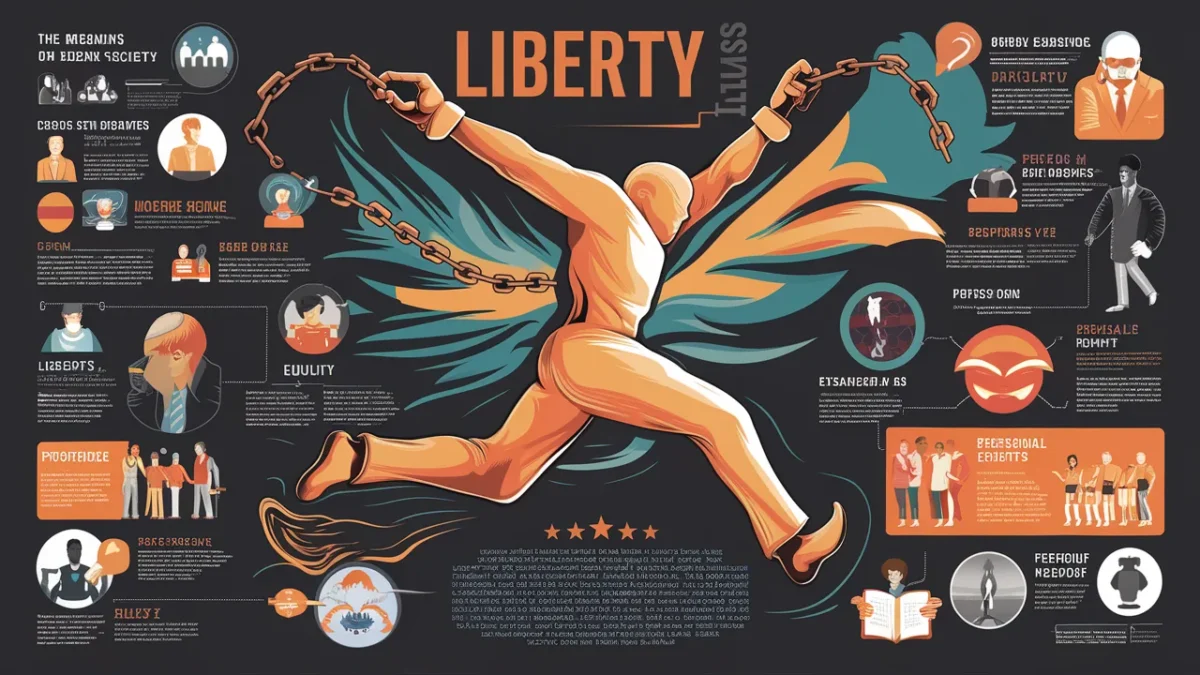

Liberty is one of the most powerful and enduring ideas in human history, representing the fundamental right of individuals to live freely, express themselves, and make choices without unnecessary restrictions. It is a concept deeply rooted in philosophy, politics, and law, shaping societies and governments across the world. From ancient civilizations to modern democracies, liberty has been at the center of movements that seek justice, equality, and human dignity. Today, liberty is not only a philosophical ideal but also a practical foundation for human rights and democratic governance. Understanding liberty helps individuals appreciate their freedoms and recognize the responsibilities that come with them in maintaining a fair and balanced society.
What is Liberty?
Liberty refers to the condition in which individuals are free to act, speak, and think without oppressive restrictions imposed by authority, while still respecting the rights of others. It is closely connected to the concept of freedom, but liberty often emphasizes structured protection within laws and institutions. Philosophers such as John Stuart Mill argued that liberty is essential for personal development and social progress, as it allows individuals to pursue their own paths in life. In democratic systems, liberty is protected through constitutions, legal frameworks, and human rights laws that ensure fairness and equality for all citizens.
Types of Liberty
Liberty can be divided into several important categories, each playing a unique role in society. Civil liberty includes basic freedoms such as speech, religion, and assembly, which protect individuals from government interference. Political liberty allows citizens to participate in governance through voting and political engagement, ensuring that power is distributed fairly. Economic liberty focuses on the ability to work, trade, and engage in business activities without unnecessary restrictions. These types of liberty work together to create balanced societies where individuals can thrive both personally and collectively.
Liberty in Historical Context
The concept of liberty has played a major role in shaping world history, especially during revolutions and movements for independence. One of the most significant events was the French Revolution, which was driven by demands for liberty, equality, and fraternity. Similarly, the American Revolution emphasized the importance of freedom from colonial rule and the establishment of democratic governance. These historical events laid the foundation for modern ideas of liberty and influenced constitutions and legal systems around the world.
Importance of Liberty in Modern Society
In today’s world, liberty remains essential for the functioning of democratic societies and the protection of human rights. It ensures that individuals can express their opinions, practice their beliefs, and make personal choices without fear of oppression. Liberty also promotes innovation, creativity, and economic growth, as people are free to explore ideas and opportunities. Without liberty, societies risk becoming restrictive and unequal, limiting personal growth and collective progress. Therefore, protecting liberty is crucial for maintaining justice, equality, and social harmony in modern life.

Challenges to Liberty Today
Despite its importance, liberty faces several challenges in the modern era. Issues such as censorship, political instability, surveillance, and inequality can threaten individual freedoms. In some regions, lack of access to education and resources also limits people’s ability to fully enjoy their liberties. Balancing security and freedom remains a major challenge for governments worldwide. Addressing these issues requires strong legal systems, public awareness, and continuous efforts to protect democratic values.
Conclusion
Liberty is a fundamental principle that defines the relationship between individuals and society, shaping how people live, interact, and grow. From its philosophical roots to its role in modern democracies, liberty continues to be a driving force behind human progress and social development. It empowers individuals to make choices, pursue opportunities, and contribute meaningfully to society. As the world continues to evolve, protecting and preserving liberty remains essential for ensuring fairness, equality, and long-term stability. Understanding liberty is not only important for academic knowledge but also for appreciating the freedoms that define everyday life.
Frequently Asked Questions (FAQ)
1. What is liberty in simple words?
Liberty means the freedom to live, speak, and act without unnecessary restrictions.
2. Why is liberty important?
Liberty is important because it protects human rights and supports democracy and equality.
3. What are the main types of liberty?
The main types are civil liberty, political liberty, and economic liberty.
4. Who is a famous philosopher of liberty?
John Stuart Mill is one of the most famous thinkers on liberty.
5. What historical events shaped liberty?
Major events include the French Revolution and the American Revolution.