
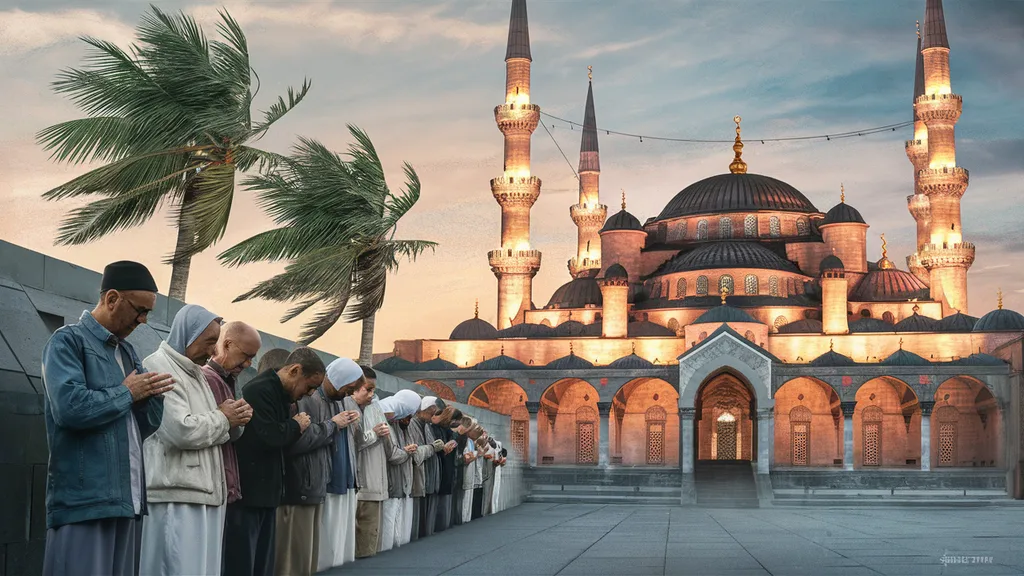

islam is the religion one of the most influential and widely practiced religions in the world, with followers spread across nearly every continent. The religion teaches belief in one God and emphasizes moral living, compassion, justice, charity, and personal responsibility. For Muslims, Islam is not simply a set of rituals or beliefs but a complete way of life that provides guidance in spiritual, social, ethical, and personal matters. The teachings of Islam encourage individuals to develop a strong relationship with God while also contributing positively to society through kindness, honesty, and respect for others.
The word “Islam” originates from an Arabic root associated with peace and submission. In the religious context, it refers to willingly submitting oneself to the guidance and will of God. This concept forms the foundation of Islamic belief and practice. Throughout history, Islam has inspired civilizations, contributed to scientific advancements, promoted education, and shaped cultures around the world. Understanding Islam requires examining its principles, values, and teachings in a balanced and informed way.
What Is Islam?
Islam is a monotheistic religion that teaches the existence of one God, known as Allah in Arabic. Muslims believe that God sent guidance to humanity through a series of prophets and messengers, including Adam, Noah, Abraham, Moses, and Jesus, with Prophet Muhammad being the final messenger. The Quran, which Muslims believe is the word of God, serves as the primary source of religious guidance, while the teachings and example of Prophet Muhammad provide practical explanations of how to apply those teachings in daily life.
The central message of Islam revolves around faith in God, worship, ethical conduct, and accountability. Muslims believe that every person is responsible for their actions and that living according to divine guidance leads to both spiritual fulfillment and social harmony. This message has remained consistent throughout Islamic history and continues to guide millions of people today.
The Meaning of Submission in Islam
One of the defining concepts of Islam is submission to God. This submission is not viewed as a loss of freedom but rather as a path toward inner peace, purpose, and spiritual growth. Muslims believe that God possesses complete knowledge and wisdom, and by following divine guidance, individuals can navigate life’s challenges more effectively.
Submission in Islam involves trust, obedience, and sincerity. It encourages believers to develop qualities such as patience during hardship, gratitude during times of success, and humility in all circumstances. These characteristics contribute to personal development and strengthen relationships within families and communities. Through submission, Muslims seek a balanced life rooted in faith and moral responsibility.
The Five Pillars of Islam
The Five Pillars of Islam are the core practices that form the foundation of Muslim religious life. The first pillar is the declaration of faith, known as the Shahada, which affirms belief in one God and the prophethood of Muhammad. This statement serves as the entry point into the Islamic faith and summarizes its most essential belief.
The second pillar is prayer, performed five times daily to maintain a connection with God. The third pillar is charity, known as Zakat, which promotes social welfare and economic justice. The fourth pillar is fasting during the month of Ramadan, a practice that encourages self-discipline, empathy, and spiritual reflection. The fifth pillar is the pilgrimage to Mecca, known as Hajj, which symbolizes unity among Muslims and represents a significant spiritual journey.
Core Values of Islam
Islam places great importance on moral character and ethical behavior. Honesty, integrity, kindness, forgiveness, and justice are among the values emphasized throughout Islamic teachings. Muslims are encouraged to speak truthfully, fulfill promises, assist those in need, and treat others with dignity and respect regardless of their background.
Justice is considered a fundamental principle in Islam. Individuals are expected to act fairly in their personal and professional dealings while avoiding oppression and exploitation. Compassion is another essential value, inspiring Muslims to support charitable causes, care for the vulnerable, and demonstrate empathy toward others. These teachings contribute to building strong communities based on trust, cooperation, and mutual respect.
The Importance of Knowledge in Islam
Education and knowledge hold a special place in Islamic tradition. From its earliest days, Islam encouraged learning and intellectual exploration. Muslim scholars made significant contributions to fields such as medicine, mathematics, astronomy, philosophy, architecture, and literature. These achievements played a major role in preserving and advancing human knowledge during various periods of history.
The pursuit of knowledge remains highly valued in Islam today. Muslims are encouraged to seek understanding throughout their lives, whether in religious studies, science, technology, or other academic disciplines. This emphasis reflects the belief that knowledge strengthens faith, promotes progress, and enables individuals to contribute positively to society.
Islam and Community Life
Community is an important aspect of Islamic practice. Muslims gather in mosques for worship, education, and social activities, creating strong bonds among members of the community. Islam teaches that individuals have responsibilities not only toward themselves but also toward their families, neighbors, and society as a whole.
Acts of charity, volunteer work, and community service are encouraged as expressions of faith. Muslims often participate in efforts to support the poor, provide educational opportunities, and assist those facing difficulties. These actions reflect the Islamic principle that faith should inspire positive contributions to society and improve the well-being of others.
Common Misconceptions About Islam
Like many major religions, Islam is sometimes misunderstood due to stereotypes, misinformation, or limited exposure to authentic sources. It is important to distinguish between the actions of individuals and the teachings of the religion itself. Islam encompasses a diverse global community with varying cultures, languages, and traditions.
A balanced understanding of Islam requires examining its foundational teachings, historical development, and contemporary practices. By learning directly from reliable sources and engaging in open dialogue, individuals can develop a more accurate and informed perspective. Greater understanding often leads to increased respect and cooperation among people of different backgrounds and beliefs.
Islam in the Modern World
Today, Islam continues to play a significant role in the lives of billions of people around the globe. Muslims contribute to various fields, including healthcare, education, business, science, technology, politics, and the arts. The religion provides spiritual guidance while encouraging believers to address modern challenges with wisdom, responsibility, and ethical conduct.
As societies evolve, Muslims continue to apply Islamic principles to contemporary issues such as environmental protection, social justice, technological innovation, and global cooperation. This adaptability demonstrates how timeless values can remain relevant in a rapidly changing world.
Conclusion
islam is the religion founded on faith in one God, moral responsibility, compassion, justice, and spiritual growth. Its teachings provide guidance for both personal development and community well-being, encouraging believers to lead meaningful lives characterized by honesty, kindness, and service to others. Through worship, education, charity, and ethical conduct, Muslims seek to strengthen their relationship with God while making positive contributions to society.
Understanding Islam requires exploring its beliefs, values, and practices with an open mind and a commitment to learning. As one of the world’s major religions, Islam continues to influence cultures, inspire individuals, and shape communities across the globe. By gaining a deeper understanding of Islam, readers can appreciate its rich history, enduring principles, and lasting impact on humanity.
Frequently Asked Questions (FAQs)
1. What does Islam mean?
Islam means submission to the will of God and is associated with peace, faith, and spiritual fulfillment.
2. Who is the founder of Islam?
Muslims believe that Islam is the continuation of God’s guidance through prophets, with Prophet Muhammad serving as the final messenger.
3. What is the holy book of Islam?
The Quran is the holy book of Islam and is considered the word of God by Muslims.
4. What are the Five Pillars of Islam?
The Five Pillars are faith, prayer, charity, fasting during Ramadan, and pilgrimage to Mecca.
5. How many people follow Islam?
Islam is followed by more than a billion people worldwide, making it one of the largest religions in the world.
6. Why is charity important in Islam?
Charity helps support those in need, reduce inequality, and strengthen communities.
7. Does Islam encourage education?
Yes. Seeking knowledge and education is highly encouraged in Islamic teachings.
8. What values does Islam promote?
Islam promotes honesty, justice, compassion, kindness, responsibility, and respect for others.