
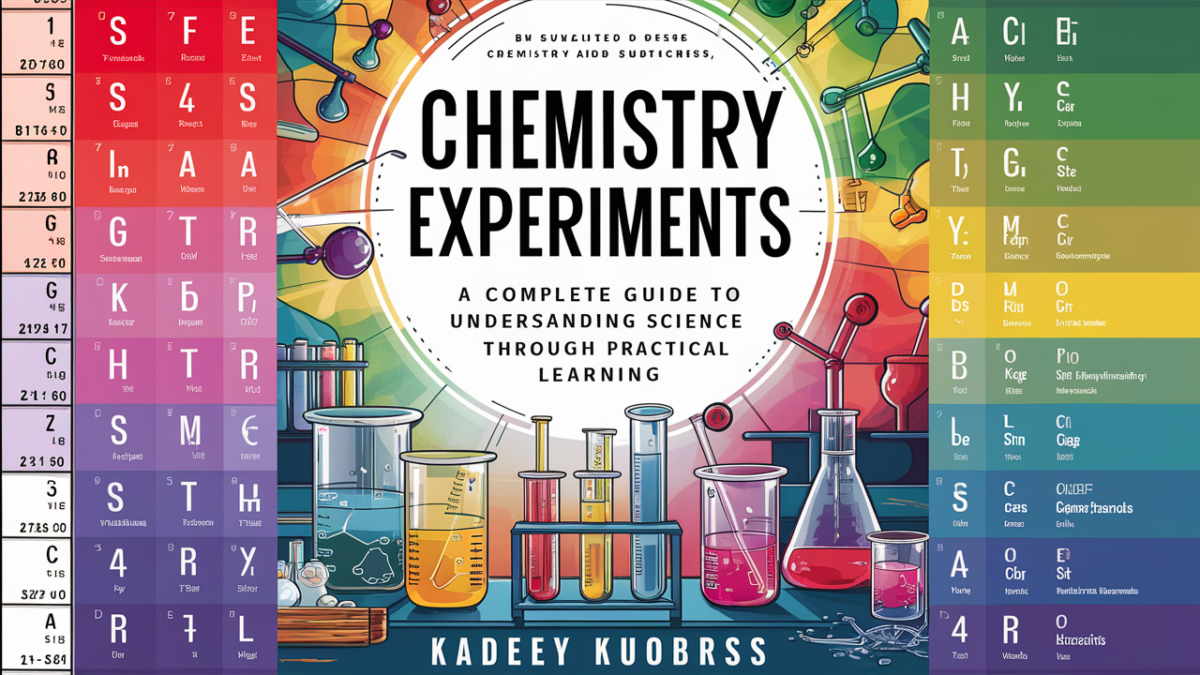

Chemistry is often called the central science because it connects many scientific fields, including biology, physics, environmental science, and medicine. While textbooks and classroom lectures provide valuable theoretical knowledge, chemistry experiments bring scientific concepts to life by allowing students and researchers to observe reactions and phenomena firsthand. Experiments transform abstract theories into tangible experiences, making complex concepts easier to understand and remember.
Chemistry experiments play a critical role in scientific education because they encourage curiosity, critical thinking, and problem-solving skills. Through observation and analysis, students learn how substances interact, how reactions occur, and how scientific principles can be applied to real-world situations. Whether conducted in professional laboratories, classrooms, or controlled educational environments, chemistry experiments provide invaluable opportunities for discovery and innovation. This guide explores the importance of chemistry experiments, their educational value, safety considerations, common types, and their impact on scientific advancement.
What Are Chemistry Experiments?
Chemistry experiments are practical investigations designed to observe, test, and analyze chemical reactions and properties of matter. They allow scientists and students to explore how substances behave under specific conditions and to verify scientific theories through direct observation. Experiments may involve mixing substances, measuring reactions, testing hypotheses, or analyzing materials to gain a deeper understanding of chemical principles.
The purpose of chemistry experiments extends beyond simply producing reactions. They help learners develop scientific thinking, understand cause-and-effect relationships, and gain practical laboratory skills. By engaging in experimentation, individuals learn how to collect data, evaluate evidence, and draw conclusions based on observations. These skills are fundamental to scientific research and problem-solving in many professional fields.
Chemistry experiments vary widely in complexity. Some involve simple demonstrations designed for educational purposes, while others require sophisticated equipment and advanced methodologies used in scientific research laboratories. Regardless of complexity, each experiment contributes to a broader understanding of chemical science.
The Importance of Chemistry Experiments in Education
Chemistry experiments are an essential component of effective science education because they bridge the gap between theory and practice. Students often find it easier to understand chemical concepts when they can observe reactions directly rather than simply reading about them. Visual and hands-on experiences improve retention and help learners connect scientific principles to real-world applications.
Practical experimentation also promotes active learning. Instead of passively receiving information, students participate in the scientific process by making observations, asking questions, and testing ideas. This engagement encourages deeper understanding and fosters a genuine interest in science.
Furthermore, chemistry experiments help students develop critical skills such as analytical thinking, attention to detail, teamwork, and scientific communication. These abilities are valuable not only in scientific careers but also in everyday decision-making and problem-solving situations.
Types of Chemistry Experiments
Chemistry experiments can be categorized into several types based on their objectives and methodologies. Demonstration experiments are commonly used in educational settings to illustrate scientific principles and capture students’ attention through visible reactions. These experiments often focus on color changes, gas production, temperature variations, or other observable phenomena.
Analytical experiments involve identifying substances, measuring concentrations, and determining chemical compositions. These investigations are widely used in research, medicine, environmental monitoring, and industrial quality control.
Synthesis experiments focus on creating new compounds through controlled chemical reactions. Scientists frequently use these experiments to develop pharmaceuticals, materials, and industrial products. Meanwhile, investigative experiments encourage learners to formulate hypotheses and design procedures to test scientific questions independently.
Each type of experiment contributes uniquely to scientific understanding and educational development, highlighting the versatility and importance of chemistry as a discipline.
Common Concepts Demonstrated Through Chemistry Experiments
Chemistry experiments help illustrate a wide range of scientific concepts. Chemical reactions are among the most frequently explored topics, allowing students to observe how substances transform into new materials. Experiments may demonstrate reaction rates, energy changes, catalysts, or equilibrium processes.
States of matter are another important concept. Through experimentation, students can observe changes between solids, liquids, and gases and understand how temperature and pressure influence these transitions. Acids and bases, oxidation and reduction, molecular structure, and solution chemistry are also commonly investigated through practical activities.
By observing these principles in action, learners gain a deeper appreciation for the mechanisms that govern the physical and chemical world around them. Practical experiences make scientific theories more accessible and meaningful.
Safety in Chemistry Experiments
Safety is one of the most important aspects of conducting chemistry experiments. Whether working in a professional laboratory or an educational environment, proper precautions are essential to prevent accidents and ensure successful outcomes. Safety procedures include wearing protective equipment such as goggles, gloves, and laboratory coats, as well as understanding the properties of the chemicals being used.
Following instructions carefully is critical. Many chemical substances can be hazardous if handled improperly, and certain reactions may produce heat, gases, or other potentially dangerous effects. Proper storage, labeling, and disposal of chemicals are necessary to maintain a safe laboratory environment.
Safety education also teaches responsibility and risk awareness. Students learn to respect scientific procedures and understand the importance of following established guidelines. These habits contribute to a culture of safety that extends beyond the laboratory into many professional and personal activities.
Chemistry Experiments and Scientific Discovery
Throughout history, chemistry experiments have played a central role in scientific advancement. Many groundbreaking discoveries, including the development of medicines, synthetic materials, and industrial processes, began with carefully designed experiments. Researchers use experimentation to test theories, explore new ideas, and solve complex problems affecting society.
Modern scientific progress continues to rely heavily on chemistry experimentation. Innovations in renewable energy, environmental protection, healthcare, and technology often emerge from laboratory research. By studying chemical interactions and properties, scientists can develop solutions to global challenges and improve quality of life.
The scientific method itself is built upon experimentation. Observation, hypothesis formation, testing, analysis, and conclusion are all fundamental components of the research process. Chemistry experiments provide the framework through which scientific knowledge expands and evolves.
Benefits of Hands-On Chemistry Learning
Hands-on chemistry learning offers numerous benefits beyond academic achievement. Practical experiences encourage curiosity and creativity, motivating students to explore scientific questions independently. Experiments also help learners develop confidence in their ability to investigate and understand complex concepts.
Collaborative laboratory activities promote teamwork and communication skills. Students often work together to plan procedures, collect data, and interpret results, creating opportunities for meaningful interaction and shared learning experiences.
Additionally, chemistry experiments make education more engaging and enjoyable. The excitement of observing reactions and discovering outcomes can inspire a lifelong interest in science and encourage students to pursue careers in scientific fields. Experiential learning creates memorable educational experiences that reinforce understanding and enthusiasm.
The Future of Chemistry Experiments
Advances in technology are transforming how chemistry experiments are conducted and taught. Digital simulations, virtual laboratories, and automated research systems are expanding access to scientific education and enabling more sophisticated investigations. These innovations provide learners with new opportunities to explore chemistry concepts while enhancing safety and accessibility.
Despite technological progress, traditional hands-on experimentation remains essential. Direct observation and practical experience continue to provide unique educational benefits that cannot be fully replicated through simulations alone. The future of chemistry education will likely combine physical experimentation with digital tools to create comprehensive learning experiences.
As scientific challenges become increasingly complex, chemistry experiments will remain a cornerstone of research, innovation, and education. Their role in advancing knowledge and solving real-world problems will continue to grow in importance.
Conclusion
Chemistry experiments are fundamental to understanding the principles that govern matter and chemical interactions. They transform theoretical knowledge into practical experience, enabling students and scientists to observe reactions, test ideas, and develop valuable analytical skills. Through experimentation, learners gain a deeper appreciation for scientific inquiry and the role chemistry plays in everyday life. From educational demonstrations to groundbreaking research, chemistry experiments drive discovery, innovation, and progress across countless fields. As science and technology continue to evolve, practical experimentation will remain an indispensable tool for learning, exploration, and advancement.
Frequently Asked Questions (FAQ)
What are chemistry experiments?
Chemistry experiments are practical investigations that explore chemical reactions, properties of matter, and scientific principles through observation and analysis.
Why are chemistry experiments important?
They help students understand theoretical concepts, develop critical thinking skills, and gain practical scientific experience.
What skills can students learn from chemistry experiments?
Students can develop observation, problem-solving, analytical thinking, teamwork, data interpretation, and scientific communication skills.
Are chemistry experiments safe?
Chemistry experiments can be safe when proper procedures, protective equipment, and safety guidelines are followed.
What is the main purpose of a chemistry experiment?
The primary purpose is to observe, test, and understand chemical processes while gathering evidence to support scientific conclusions.
How do chemistry experiments support scientific discovery?
Experiments allow scientists to test theories, explore new ideas, develop technologies, and solve real-world problems through evidence-based research.
Can chemistry experiments improve learning outcomes?
Yes. Hands-on experiences improve understanding, increase engagement, and help students retain information more effectively than passive learning alone.
What is the future of chemistry experimentation?
The future includes advanced laboratory technologies, digital simulations, automation, and innovative research methods that enhance both education and scientific discovery.